
Sensory Processing Therapy
Tags in shirts, loud cafeterias, sticky hands, a haircut. For some children, ordinary sensations feel like too much, or never feel like enough. At Brighten Pediatric Therapy in Hobbs, NM, we help children make sense of their senses.
What Sensory Processing Differences Look Like
The brain takes in information from eight senses, including movement and body position, and decides what to ignore and what to act on. When that filtering is off, a child may be overwhelmed by input other people barely notice, or may need far more input than a normal day provides.
The result looks like picky eating, meltdowns in stores, refusing to wear shoes, crashing into furniture, or never sitting still. It isn't defiance. It's a nervous system asking for help.
You might notice your child:
- Is bothered by clothing tags, seams, socks, or certain fabrics
- Covers their ears or panics at hand dryers, fireworks, or crowds
- Eats a very short list of foods and gags at new textures
- Hates haircuts, nail trims, tooth brushing, or messy play
- Constantly moves, jumps, crashes, spins, or chews on things
- Seems to have no sense of personal space or plays too rough
- Gets car sick easily or is afraid of swings and slides
- Falls apart after a busy day at school or a birthday party
What Sensory Integration Therapy Addresses
We evaluate how your child responds to each type of sensory input, then build a plan that helps their nervous system find a calmer, more organized baseline.
Sensory Diets
A daily menu of movement, touch, and calming activities, timed to the moments your child struggles most, and simple enough to run at home and at school.
Tactile & Texture Tolerance
Gradual, playful exposure to textures, from sand and shaving cream to new foods and fabrics, always at your child's pace.
Movement & Balance
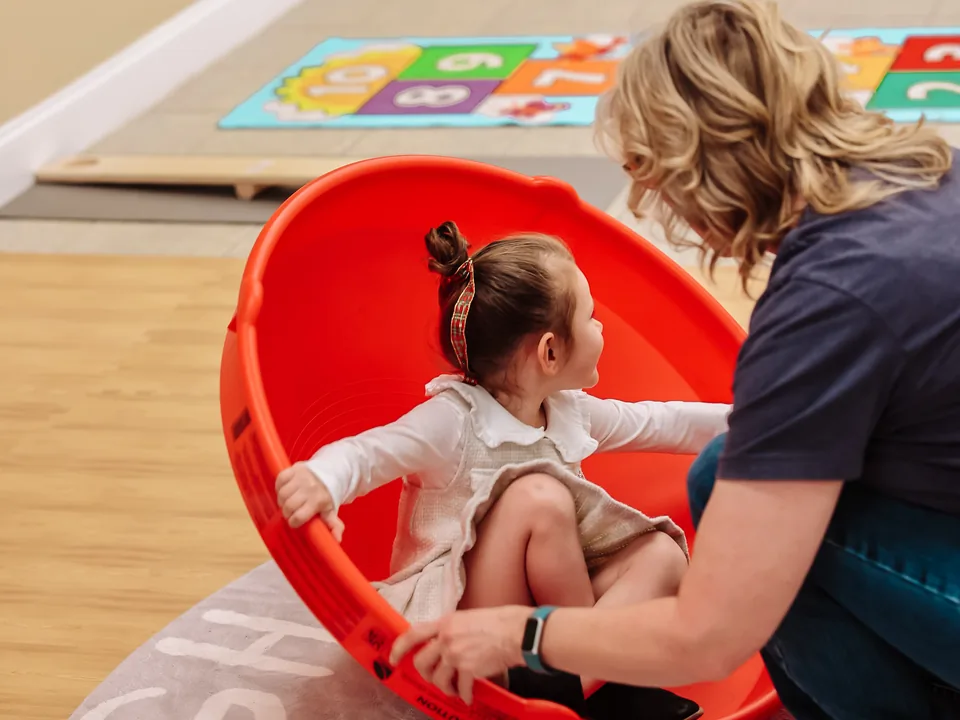
Swings, therapy balls, climbing, and obstacle courses that give the vestibular and body-position systems the input they need to feel steady.
Noise & Light Sensitivity
Tools and strategies for loud, bright places, plus practice building tolerance so school assemblies and restaurants stop being off limits.
Feeding & Clothing Comfort
Expanding the foods your child will eat and the clothes they will wear, so mornings and mealtimes stop being a fight.
Calm-Down Strategies
Helping your child notice when they're getting overloaded and reach for something that works before the meltdown, not after.
Our Approach
Sensory integration therapy looks like play because it is play: swinging, climbing, digging, squeezing, and spinning in a room designed for it. Underneath, every activity is chosen to give your child's nervous system exactly the input it's asking for.
We never force a child through something that frightens them. We build trust first, then stretch comfort zones one small, successful step at a time.
And because sensory needs show up all day, not just in our clinic, we coach you in every session so the strategies come home with you.
What to Expect
Getting started is simple.
Call or Request a Consultation
We'll talk through what you're seeing at home and answer your questions.
Sensory Evaluation
Standardized sensory questionnaires plus hands-on observation of how your child responds to touch, movement, sound, and more.
Personalized Treatment Plan
Goals that matter to your family, a sensory diet for home, and a clear explanation of what we found.
Weekly Therapy + Home Program
45-minute sessions, once a week, with home activities after each visit so progress keeps building.
Insurance & Scheduling
We accept most major insurance plans, including New Mexico Medicaid. New patients are typically seen within two weeks of their first call.
Serving Hobbs, NM and surrounding communities within 30 miles. Insurance and Medicaid details
Frequently Asked Questions
Is sensory processing disorder a real diagnosis?
Sensory processing differences are real and well documented, and they're a core part of what pediatric occupational therapists treat. They often occur alongside ADHD, autism, or anxiety, and sometimes on their own. You don't need a formal label to get help.
Do I need a referral from our pediatrician?
Many insurance plans require a physician referral and authorization. We'll help guide you through that process. Just give us a call.
Will my child grow out of it?
Some children do become less sensitive with age, but many carry the same struggles into school and adolescence. Therapy gives your child tools now, when the habits around eating, dressing, and coping are still forming.
How long will my child need OT?
Treatment plans are typically 6-12 months with weekly sessions, though this varies by child. We set specific, measurable goals and review progress regularly so you always know where things stand.
Can you help with picky eating?
Yes. Sensory-based feeding challenges respond well to occupational therapy. We expand your child's foods slowly and playfully, without pressure or force at the table.
Let's help your child shine.
Every child deserves to feel comfortable in their own body and in the world around them. If sensory challenges are getting in the way, Brighten Pediatric Therapy is here to help.
Hobbs, NM's only pediatric occupational therapy clinic. We accept most major insurance plans including Medicaid.